Tag: Politics

  • How does digitalization reshape the nature and depth of youth political participation across contemporary Europe? Wara (2026) conducts a systematic qualitative meta-synthesis grounded in mobilization theory to evaluate how digital communication platforms, e-governance, and e-democracy tools have redefined civic activism among young adults. Synthesizing evidence from 30 peer-reviewed articles published between 2014 and 2025 indexed in Web of Science and related repositories, the study investigates how technological shifts lower participation barriers while simultaneously introducing new structural tensions to democratic engagement.

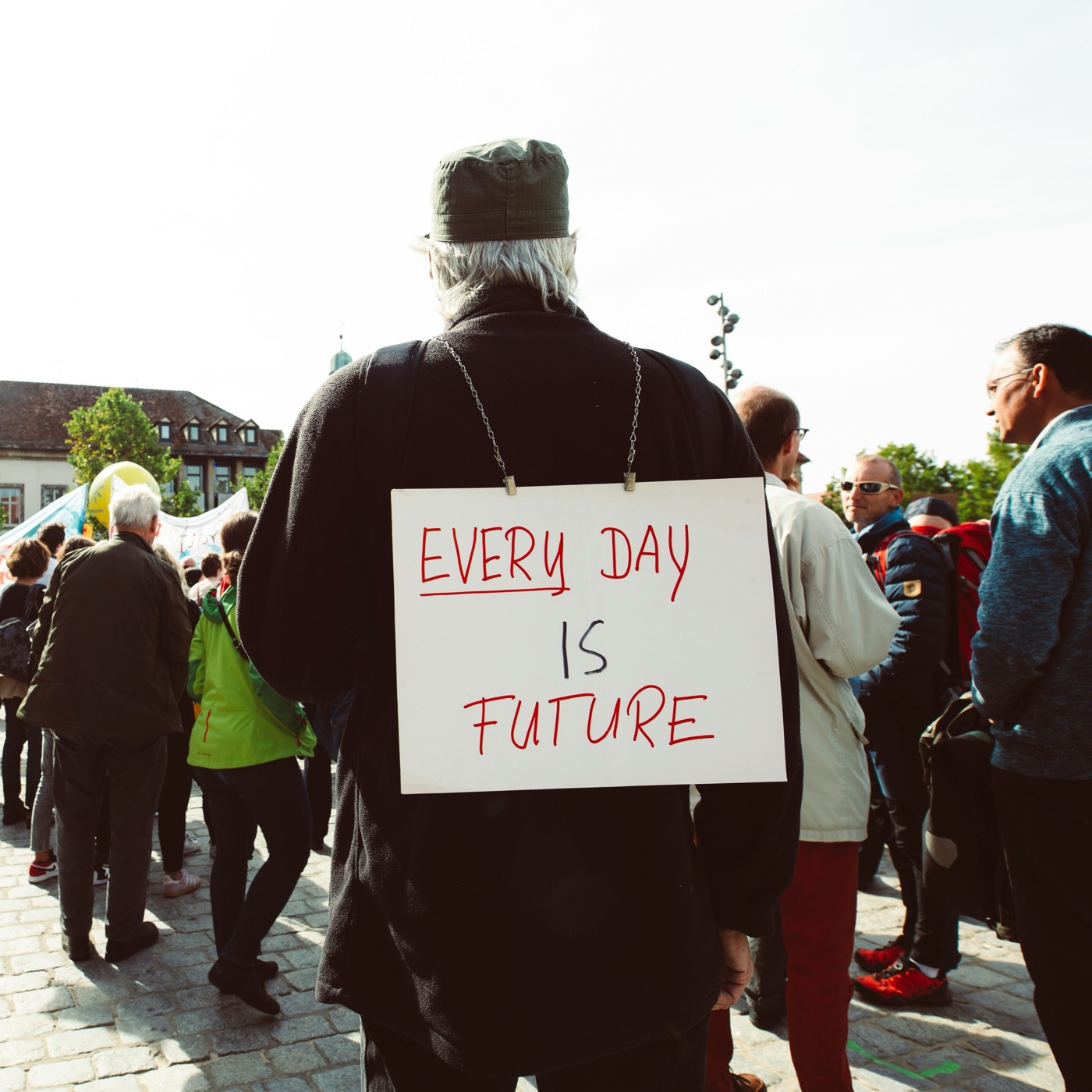
    The findings demonstrate that digitalization has decentralized civic life by opening accessible, non-hierarchical arenas for political expression and collective action beyond traditional party and state apparatuses. Digital platforms enable rapid, horizontal organizing and transnational mobilization, as demonstrated by youth-driven movements such as Fridays for Future. However, this transformative potential is constrained by severe counterweights. Persistent digital divides, unequal access to digital infrastructure, and disparities in technological literacy continue to hinder equitable participation across different regions of Europe. Furthermore, the ecosystem of digital politics is complicated by cybersecurity vulnerabilities, pervasive online misinformation, and the risk of slacktivism, which can reduce active political commitment to superficial digital gestures and fuel ideological polarization.

    The study concludes that realizing the participatory benefits of digital politics requires structural intervention rather than passive reliance on technological diffusion. Sustainable digital democracy demands coordinated, cross-sectoral collaboration among governments, civil society, and educational institutions. These stakeholders must work in concert to advance digital equity, embed comprehensive critical media literacy into youth education, and construct inclusive, accountable digital governance architectures capable of mitigating polarization while safeguarding democratic participation in the digital era.

    Learn more about this article here:

    Wara, Y. A. (2026). Influence of digitalization on political participation among young adults in contemporary Europe. Open Research Europe, 5, 360. https://doi.org/10.12688/openreseurope.21521.2


  • What determines young Europeans’ trust in political institutions—their direct democratic participation or their everyday experience with the welfare state? Broka (2026) investigates the structural and social foundations of youth political culture across the European Union, examining how institutional performance, social trust, and civic activism shape the political orientations of young adults aged 18 to 29.

    While European youth policies have long prioritized socio-economic and civic inclusion, persistent vulnerabilities across critical welfare dimensions continue to delay transitions to financial independence and full citizenship. Drawing on longitudinal data from the European Social Survey (2002–2023) across the EU-28 countries, the author utilizes a theory-driven hierarchical multiple regression that progressively incorporates welfare state variables, interpersonal and social trust indicators, and measures of political power and civic activism to evaluate their relative explanatory power on political trust.

    The empirical analysis reveals that satisfaction with welfare-state institutions serves as the single strongest predictor of youth political trust, accounting for 40.6% of the observed variance. Although young adults display relatively low levels of formal political participation, the results demonstrate that structural and institutional factors—specifically welfare satisfaction, social and interpersonal trust, and level of education—exert a substantially stronger influence on political trust than direct political activism. Ultimately, the study underscores that youth political culture is fundamentally multidimensional, shaped far less by conventional democratic procedures alone than by effective institutional delivery, social safety nets, and broader societal organization.

    Learn more about this article here:

    Broka, A. (2026). Youth Political Culture in the European Union: Welfare Institutions, Political Trust, and Participation. Politics and Governance, 14, 11715. https://doi.org/10.17645/pag.11715

  • How can public funding schemes bridge the gap between high-level policy agendas and grassroots practice to mobilize marginalized youth? Wielath et al. (2025) investigate the role of funding programs as meso-level infrastructures that mediate between macro-level political strategies and micro-level local implementation, assessing how these mechanisms can be designed to empower young people who are rarely engaged in political processes.

    Drawing on desk research and two expert focus groups conducted at both national and European levels, the study examines youth-focused funding architectures across four analytical dimensions: conceptual frameworks, cross-sectoral positioning, the inherent logic of administrative structures, and responsiveness to the lived realities of youth and community practitioners. The authors demonstrate that funding programs cannot be evaluated at the program level in isolation. Instead, they act as critical levers and mediators connecting systemic political goals with the everyday practices of youth workers and marginalized participants.

    The analysis reveals that successfully engaging underrepresented youth requires moving past deficit-oriented narratives that treat marginalized groups as passive recipients. Programmatic success relies on embedding robust bottom-up feedback loops, easing administrative rigidity to accommodate non-traditional civic actors, and investing in durable local infrastructures rather than short-term project cycles. The authors conclude that youth participation policies must transition toward long-term, context-sensitive, and coordinated funding frameworks that directly align structural resources with the practical needs of young citizens on the ground.

    Learn more about this article here:

    Wielath, S., Pelzer, M., Hofmann-van De Poll, F., & Rottach, A. (2025). Political Participation of Marginalized Young People: Examining Funding Programs from a European and National Perspective. Youth, 5(4), 108. https://doi.org/10.3390/youth5040108

  • How do perceived discrimination and national identification condition the political participation of young immigrants compared to the native-born majority? Hoffmann and Benoit (2025) investigate the mechanisms of youth political socialization in Germany—where nearly one-third of the population possesses a migration background—to evaluate why established predictors of civic action operate differently among diverse young adults aged 18 to 30.

    While adult immigrants consistently display lower participation rates than majority populations, findings among youth remain contradictory, largely because conventional determinants such as socioeconomic resources, political efficacy, and political interest are still actively forming during early adult transitions.Using the Civic Voluntarism Model as their theoretical baseline, the authors analyze data from Wave 5 of the German branch of the Children of Immigrants Longitudinal Survey in Four European Countries (CILS4EU-DE).

    Through linear regression models, the study examines both conventional political participation (such as formal institutional voting or party-affiliated action) and unconventional participation (such as demonstrations and grassroots activism), testing whether personal experiences of discrimination and feelings of national identification moderate the classic relationship between resources, psychological engagement, recruitment networks, and political action.The findings reveal that perceived discrimination exerts diametrically opposed effects on recruitment networks and unconventional participation across groups, acting as a mobilizing catalyst for young adults with a migration background while depressing unconventional engagement among youth without a migration background.

    Furthermore, strong national identification functions as an unexpected dampener, weakening the positive effect of political interest among majority youth and diluting the mobilizing power of recruitment networks among immigrant youth. In contrast, neither discrimination nor national identification moderates socioeconomic resources or conventional political participation in either group. The study concludes that immigrant youth mobilization is shaped by distinct cognitive and relational negotiations of belonging and institutional exclusion, demonstrating that experienced discrimination frequently redirects marginalized youth toward unconventional political arenas rather than inducing civic apathy.

    Learn more about this article here:

    Hoffmann, P., & Benoit, V. (2025). Political Participation of Young Immigrants: Do National Identification and Discrimination Moderate the Relationship? Politics and Governance, 13, 9253. https://doi.org/10.17645/pag.9253

  • How do experiences of discrimination and social participation interact to foster political interest among immigrant-origin youth? Agyeman-Osei (2025) examines the cognitive mechanisms underpinning youth political socialization, addressing conflicting empirical literature on whether adolescents with an immigrant background exhibit higher or lower levels of political interest than their native-born peers.

    Political interest serves as a primary cognitive driver of active political participation and long-term democratic integration, taking root early in adolescence and developing alongside key sociodemographic markers such as socioeconomic status and immigrant heritage. However, existing research reveals contradictory patterns, with some studies identifying suppressed political interest among immigrant youth while others observe heightened political interest. The author investigates whether these conflicting outcomes can be explained by personal experiences of discrimination and their potential moderating effect on social participation—a well-established correlate of civic and political interest.

    Drawing on empirical data from the Children of Immigrants Longitudinal Survey in Four European Countries (CILS4EU), the study captures a wide range of discrimination experiences reported by young people across national contexts. Utilizing linear regression models, the author evaluates the direct and interactive effects of discrimination and social participation on adolescents’ political interest. The empirical findings reveal that both discrimination experiences and active social participation exert statistically positive effects on youth political interest. Crucially, the analysis identifies no significant moderation effect between the two variables, demonstrating that discrimination and social participation operate as independent, additive pathways to political awakening rather than mutually amplifying dynamics. The study concludes that adversity and marginalization do not inherently induce political apathy; rather, confronting discrimination can stimulate critical political interest among immigrant youth, underscoring the need for institutions to provide supportive civic avenues that translate this interest into sustained democratic participation.

    Learn more about this article here:

    Agyeman-Osei, K. M. (2025). CIVIC INTEREST FROM THE MARGINS: DISCRIMINATION AND YOUTH POLITICAL ENGAGEMENT. https://doi.org/10.5281/ZENODO.19368161

  • How do institutional participatory frameworks within the European Union govern, absorb, and constrain extra-parliamentary youth activism? Pušnik (2024) critically examines the institutionalization of youth civic engagement at both the supranational level of the European Union and the national level in Slovenia, interrogating whether official participatory structures empower young people or neutralize disruptive democratic critique. Grounded in a Foucauldian analytics of government (governmentality), the study traces the emergence of institutional youth engagement back to the European student mobilizations of 1968, arguing that modern participatory frameworks were historically designed to govern dissident energy and align youth action with state and supranational priorities.

    Focusing on contemporary consultative instruments, specifically the EU Youth Dialogue and the Council of the Government of the Republic of Slovenia for Youth, the author demonstrates that institutional mechanisms systematically privilege conventional representative practices—most notably electoral turnout and formalized consultation—while disregarding or delegitimizing autonomous, extra-parliamentary, and contentious political action. Concurrently, the study reveals how neoliberal rationality operates within these architectures to depoliticize structural inequalities by shifting the burden of democratic engagement entirely onto individuals. Rather than redistributing decision-making power, these mechanisms cultivate an idealized identity of the active economic citizen who participates only within strictly prescribed, non-disruptive parameters. The author concludes that institutionalized youth participation largely functions as a disciplinary technology that pacifies radical civic impulses outside the ballot box rather than fostering expansive democratic agency.

    Learn more about this article here:

    Pušnik, T. (2024). INSTITUTIONALISATION OF YOUTH POLITICAL PARTICIPATION IN THE EU: A NEOLIBERAL ATTEMPT TO CASTRATE THE POLITICAL ENGAGEMENT OF YOUNG PEOPLE OUTSIDE THE BALLOT BOX. Teorija in praksa, 341–362. https://doi.org/10.51936/tip.61.2.341

  • How do political systems shape the way media operates? Hallin and Mancini (2004) identify three core models—Polarized Pluralist, Democratic Corporatist, and Liberal—to explain how media systems differ across Western democracies.

    Examining media institutions across eighteen West European and North American democracies, the authors outline the main ways media systems vary and the political conditions that shaped their development. Through these three models, Hallin and Mancini explain why media outlets hold different roles in politics across these societies, while also exploring the forces of change currently reshaping them. In doing so, the authors provide a foundational framework for understanding how media and political systems interact, offer a key methodology for comparative studies in political communication, and give a clear overview of Western media institutions within their political and historical contexts.

    Learn more about this book here:

    Hallin, D. C., & Mancini, P. (2004). Comparing Media Systems: Three Models of Media and Politics (1st ed.). Cambridge University Press. https://doi.org/10.1017/CBO9780511790867